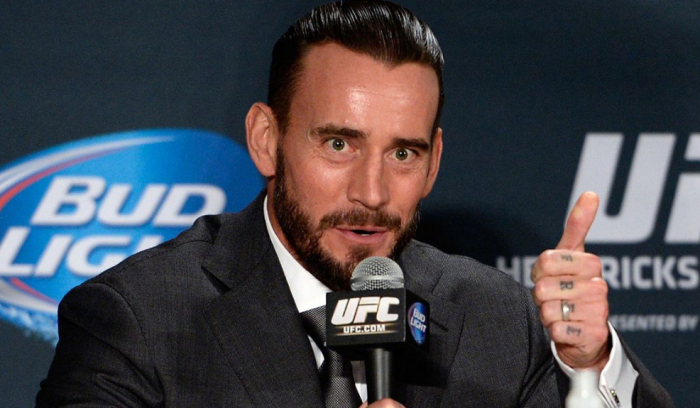
CM Punk Broke the Internet.

CM Punk

As UFC 203 drew to a close, it was difficult to take my mind off the cataclysmic failure in which Phil Brooks had just endured.

For those wondering who Phil Brooks is, he’s known by most as CM Punk, a former professional wrestling champion and self proclaimed “Cult of Personality”.

The reason I call him by his real name, rather than his stage name, is to differentiate his past from his present. Nothing in his past could have prepared him for the stark realization that, when it comes to mixed martial arts, you’re either born with it or you’re the other 99.9% of the world.

Brooks got battered. There’s no debate about that. The bout lasted two and a half minutes and there wasn’t a second in the fight when he wasn’t being dominated.
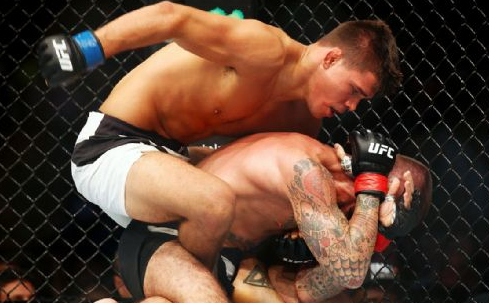
BATTERED: Phil Brooks being pummelled by welterweight prospect Mickey Gall.

It was hard to watch at times. Just seconds in, it was abundantly clear that this experiment wasn’t going to have a happy ending for the Chicago native. And although the fight proved brutal, it also proved necessary.

This fight, along with other examples (James Toney VS Randy Couture & Jose Canseco Vs Hong Man Choi immediately spring to mind) are reminders to the general public that, although the term “mixed martial arts” has the word “art” in it, there’s nothing artistic about being punched in the face.

MMA is savage. On the same card, viewers witnessed a man’s finger becoming so badly dislocated that, when the footage is paused, you can clearly see a bone sticking out. Viewers also witnessed Alistair Overeem, a man with over 15 years of MMA experience, being unapologetically knocked unconscious. This isn’t a game folks.

The Phil Brooks experiment, if nothing else, provoked opinions. On one side, many admired the man for chasing his goals and following his dreams. On the other, many seen his move into professional fighting as cocky, arrogant and ignorant. He’s always been considered a controversial character and his move into MMA was cut from the same cloth.

Brooks said, “In life, you go big or you go home” after the fight. It was an admirable act of courage to step into the octagon and the man deserves respect for that alone. But there’s nothing more humbling in life than a punch to the face. And unfortunately for Brooks, he learned that the hard way on several occasions.

His Rocky story didn’t have a happy ending. His face and ego were left battered and bruised. And his reputation? Well, he’s always been known as an entertainer and his journey has certainly entertained fans and spectators alike. So, credit to him.

It’s not clear if we’ll see Phil Brooks back in the octagon. But if we do, I hope it’s to promote a Wrestlemania, rather than to venture into a world that rewards the few and condemns pretenders through violence.

His record reads zero wins, one loss. And with his 38th Birthday fast approaching, I just can’t see that improving anytime soon.

Gary Neville: Lost in Translation?

Screen Shot 2016-03-31 at 02.16.18

The news that Gary Neville had been sacked as manager of Valencia has not come as a shock to many. His disastrous run saw only 10 wins in 28 games, with the former Manchester United captain actually losing more games than he had won. Valencia’s league performance was especially worrying, with Neville only winning 3 of his 16 games in La Liga.

The statistics surrounding his managerial tenure are for dire reading. But, like most sports, although results are what go on to define you, they really don’t tell the full story.

Valencia is a club in turmoil and has been for many years. They’ve not came close to winning a trophy since winning the Copa Del Rey in 2008 (that’s 2907 days for all you statisticians). They’ve also had 7 managers in the last 4 years and seem reluctant to give any of these managers the time or space to set a footballing philosophy. Managers simply don’t have the time to turn it around, and when you consider the fact they’ve not won silverware in such a long time, it begs the question; Why?

Gary Neville was always subject to an uphill battle. The nationalistic Spanish press was all over him from day one, with him eventually saying, “I said before I came that I would be judged in five months. I have been judged in six weeks”.

He often seemed shaken at press conferences, often looking unsure of himself when he was fielded questions in Spanish. When he gave his answers in English, which subsequently had to be translated to Spanish for the Spanish Press and fans to understand, the moment was gone. His passionate answers seemed to lose their effectiveness. “I’ve only ever been one way in football and that’s to win every match”, he claimed in his first interview as Valencia Manager. Many were cynical from the beginning.

Maybe it was a case of the job being “too much, too soon” for Neville to cope with. He perhaps could have come better equipped for the job. As previously mentioned, his lack of experience with the Spanish language (or Spanish football for that matter) meant he would have problems. He couldn’t take team talks or even communicate effectively with his predominantly Spanish team due to the language barrier. Instead he relied on translators and pre-prepared liaison to get his messages across. Perhaps his words of wisdom lost their magic.

His team tactics were often subject to both experimentation and injuries. With a manager coming in halfway through a footballing season, it is expected he has a concrete idea of how the team are going to play and line out. This didn’t seem to be the case, as Neville opted to experiment with five different formations in his first eight league games, trying out 4-3-3, 5-3-2, 4-4-2, 4-1-4-1 and 4-2-3-1. Injuries to Diego Alves, Enzo Perez, Jose Gaya and Sofiane Feghouli also didn’t help team performances.

And with faltering team performances came the impending passionate response from Neville. But this response ended up being his eventual undoing.

His downfall came from his own words. His own beliefs. He set himself up for scrutiny by basing his employment on the ideal that he’d turn it around, and turn it around quickly. He wasn’t shy about telling the fans of his plans to make the club great again. His claims of immediate success unfortunately didn’t happen, and the cool, calm and collected Neville was made to look foolish with his words of optimism.

Fan support wavered. Once believers in Neville, they began boo’ing the Englishman venomously. They didn’t see the product Neville had professed about. They didn’t care for his passion. All they had seen was their football club in crisis mode, losing games to lesser opposition on a consistent basis. And with club legends such as Santiago Cañizares and Gaizka Mendieta openly condemning Neville, it was only a matter of time before he was shown the door.

When taking the Valencia job, he claimed. “If I’d have turned down this job, I could have said goodbye to credibility in football because it’s a massive club”. This quote in itself describes Neville; A fierce competitor with huge wells of confidence. He believed this was his chance to shine.

His final game, a lacklustre 2-0 defeat at home to Celta Vigo was the final nail in the coffin. His team looked uninspired. He looked lost. And the fans, with their white handkerchiefs at the ready, boo’d Neville out of the Mestalla Stadium.

The real sadness from this story is the “what could have been” factor of the sacked football manager. Managers are often in and out of a job before anyone can even process what’s going on. It’s a fickle sport, with fickle fans and fickle businessmen. Realistically, four months is not nearly enough time to prove your worth in any line of work. Neville may feel hard done by, but in the long run, if Valencia don’t drastically transform their entire club, it may prove to be the luckiest break he’s ever had.

Album Review: Kendrick Lamar – To Pimp a Butterfly.

For those of you that have been living on Mars for a few years; Kendrick Lamar is one of the most highly touted and well-respected rappers to emerge in recent times. Adored by both rap fans and fellow musicians, he has been compared to the likes of Tupac Shakur, Ice Cube and Bob Dylan. And before you ask….Yes, I said Bob Dylan. Well, Pharrrel Williams did.

Album Cover: Kendrick Lamar -To Pimp a Butterfly.

After taking an almost 3 year hiatus, The Compton native released “To Pimp a Butterfly”, his first album since the critically acclaimed “Good Kid, M.A.A.D City”. The story behind the album title is a strange one; after ditching several other planned titles, Kendrick claimed, “I just really wanted to show the brightness of life and the word “pimp” has so much aggression, and that represents several things. For me, it represents using my celebrity for good. Another reason is, not being pimped by the industry through my celebrity.”

The anticipation for this album is something that’s been lost from Hip-hop in recent times. In all honesty, the last time I can remember a hip-hop album release becoming so captivating was on September 11th 2007, when both Kanye West and 50 Cent released their respective albums (“Curtis” and “Graduation”).

The pressure was well and truly on Kendrick, who at this point has become a rap deity to his fans. With titles such as “savior of hip-hop” and “the new Tupac Shakur” synonymous to Kendrick, there’s no question many were expecting a classic in the proportions of “Illmatic”.

Did the album live up to expectations? I don’t think it did. I think it surpassed them.

Many expected him to release a music album and what his fans got instead was a socio-political manifesto, the likes of which I personally haven’t experienced through the medium of modern hip-hop music (on this level anyway). The album is both contextually poignant and thought provocative. There are many layers to the album and to mention them all in this article would read similarly to a college dissertation. So I’ll try and keep it brief.

After first listening to the album, I was completely flabbergasted. I was overawed by his consistent challenges to black culture’s ethos, as well as the condemnation and reluctance to allow himself to become “pimped” or bought by the entertainment industry in the name of selling out his morality. This theme has been heard by many black entertainers before; Dave Chappelle for example quit his show and allegedly turned down £50 million dollars to stay, in the name of his morality and racial integrity. “And if I gotta brown nose for some gold, then I’d rather be a bum than a motherfuckin’ baller” sums up his argument in “King Kunta”. Pretty heavy stuff, considering we’re only on track 3.

The constant idea that Kendrick is the new face and voice of the black community is constantly reinforced. He has mixed views on this idea and can be heard In “Mortal Man” interviewing Tupac Shakur posthumously about this. The complexities associated with Kendrick taking on this role are consistently referred to. “I remember you was conflicted, misusing your influence, sometimes I did the same” is heard repeatedly throughout the album to reinforce this.

His overall disgust and confusion about himself is also referred to in “Blacker the Berry” when he says, “So why did I weep when Trayvon Martin was in the street, when gang banging make me kill a n***a blacker than me? Hypocrite”. The mention of both the Trayvon Martin case and black gang culture are very sensitive subjects, but Kendrick shows bravery by going headfirst into it. He holds nothing back and condemns his own actions and thoughts. More importantly, this lyric directly condemns the gang elements related to civil rights cases, such as the events surrounding the Trayvon Martyn case. The term “paradigm shifting” isn’t a strong enough expression for a message as powerful as this, and sets this album apart from other modern hip-hop albums. Truly revolutionary material.

Kendrick’s brutal honesty and constant referral to historical context and political influence is a breathe of fresh air in modern hip-hop. Kendrick’s taken the genre of politi-rapping to a previously unattainable level, and has embedded this poetic message into a beautifully produced music album. His unique commentary on black culture is an audio masterpiece and his take on entertainment and show-business is fascinating. This, in my opinion, is the best album I’ve heard in years and a true lyrical masterpiece. I’d rate this album 10/10, 5 microphones out of 5 and reward the album all the accolades I could. I don’t think anything rap/hip-hop related holds a candle to this. Nothing even comes close.

https://www.youtube.com/watch?v=6AhXSoKa8xw

Conor McGregor: The Uncrowned UFC King?

The takeover is complete; on the 9th October 2014, history was made as a huge banner displaying an image of UFC Featherweight contender and Irish patron Conor McGregor was displayed on Dublin’s famed “O’Connell Street”.

NOTORIOUS: (Left to Right) Aisling Daly, Paddy Holohan, Cathal Pendred and Conor McGregor posing in front of banner displaying image of Conor McGregor seen on O"Connell Street.
Left to Right: Aisling Daly, Paddy Holohan, Cathal Pendred and Conor McGregor posing in front of banner displaying image of Conor McGregor on O’Connell Street.

The significance of this event is staggering. London is known for Soho. New York is known for Fifth Avenue. Dublin is known for O’Connell Street. And yet most people still consider mixed martial arts a largely underground sport. In Ireland however, the reach of the UFC has came leaps and bounds as a result of one man and one man only; “The Notorious” Conor McGregor. RTE channel “3e” has become the official Irish platform for Conor’s most recent UFC fights, much to the delight of Irish fight fans that get to view these events for free. Furthermore, the UFC is delighted to keep the freebies coming, with McGregor and the UFC signing a deal to broadcast his next fight on 3e (free of charge, of course). TV3 Group Head of Sport Kieran Holden commented on this, saying “(McGregor’s last fight) reached a massive 600,000 viewers, proving how quickly Mixed Martial Arts has grown in Ireland. Conor McGregor has quickly become one of the biggest names in Irish sport and we are thrilled to be able to show his next fight to the free-to-air viewers in Ireland.”

And yet, there’s a level of mystique and allure to the attraction that is, Conor McGregor. How did this happen? How did McGregor single handedly galvanise an entire country into viewing a sport favourably? And furthermore, how did McGregor provoke pre-existing UFC fans into “believing the hype” and following the fighter so relentlessly? For a start, there’s no question that the guys got talent, and his accolades speak for themselves. He was crowned an Irish amateur boxing champion at a young age, and was Cage Warriors first and only two-division champion. Partner that with the fact that he’s got a 16-2 MMA record, with 14 of his wins coming by way of knockout. It’s worth noting that his 2 loses came quite early in his career, and he’s evidentially improved dramatically since then.

But to suggest his talent for fighting is the only reason behind his native nation’s interest in the fighter (and the sport) would be ridiculous. McGregor is blessed with what’s known by many as “the gift of the gab”. His speeches are incredible. He hypes fights with a passion like no other. His poetic linguistics often hypnotises viewers into watching his fights. To summarise, he creates interest through what he says and how he says it. And let’s not get it twisted. This isn’t completely unheard of. It’s been done before. Muhammad Ali did it. Prince Naseem Hamed did it. Chael Sonnen did it. Floyd Mayweather continues to do it. Talking gets people into the tent. People tune into McGregor’s fights for two conflicting reasons; either they want to see the cocky, brash, Irish dude get his head knocked off his shoulders OR they want to see him triumph with a level of flair and confidence rarely seen in fighting.

There’s entertainment value to his words. There’s also entertainment value to his style of fighting. His managing of distance on the feet, as well as his crisp punching and acrobatic kicks are an enigma. He fights with the mentality that he has to finish his opponent, to the delight of his fans. And what’s amazing about McGregor, is that he usually does. You can’t tie down the reasoning behind McGregor’s meteoric rise in the UFC to one action or event. He’s a multifaceted character that appeals to an entire nation, and provokes dialogue from an entire sport. What’s most interesting about Conor McGregor though, is that he’s just getting started. At 26 years old, he’s ranked number 5 in official UFC Featherweight rankings, and seems to be posturing strongly for a title shot. He’s got everyone talking, including UFC President Dana White, who recently said: “If you go down the list (of UFC Featherweights), every one of those guys has fought Jose Aldo already. Conor hasn’t. So who do you line up next for the champ other than Conor?” He’s become Ireland’s most interesting man in less that 3 years, and continues to grow in popularity. And with whispers of the Aviva Stadium being mentioned as the venue for his next fight, it’s worth paying attention to how the next few months play out.

UFC 168. Wow.

Screen Shot 2017-11-26 at 14.11.54

The anticipation for the rematch between Anderson Silva and Chris Weidman reminded me of some of the great rematches in boxing; Muhammad Ali Vs Joe Frazier, Manny Pacquiao Vs Juan Manuel Marquez, Lennox Lewis Vs Hasim Rahman to name a few.

There were still questions many had about the first fight. Was it a fluke? Was Chris Weidman in Anderson Silva’s league? Could Anderson Silva really hang with the best in his division at 38 years old? We all thought these questions would be answered tonight. But for many, Weidman’s victory was tainted.

The fight started with Anderson Silva looking very tentative on the feet. He seemed much more respectful of Chris Weidman’s skills than he did in the first fight and looked to strike from distance. Weidman clinched Anderson and attempted a takedown, which was stuffed. Very promising signs from Anderson.

Then we seen Anderson Silva attempt to gain the plum (or Muay Thai clinch) and strike with Weidman. We’ve seen this before; a perfect example would be the dismantling of Chris Leben in 2006. But unlike Leben, Weidman looked to present his own offense and clipped Anderson, forcing him on to the canvas. He landed devastating strike after devastating strike, before being tied up in Anderson’s guard.

As the round ended, I was overcome with tenseness and anticipation; it’s not that I wanted either fighter to win, I just wanted answers to the many questions I still had from the first fight. What was clearly apparent though, was that Anderson Silva had his work cut out and Weidman was dominating him. By miles.

The second round is a blur. Because trying to analyse individual strikes and events is completely redundant when you consider the ending. Anderson Silva threw a strong leg kick (which he’s done for the entirety of his career). The kick itself wasn’t out of the ordinary. But Chris Weidman’s reaction to the kick, as well as the impact of the kick was heart wrenching.

Weidman checked the kick strongly, which shattered Silva’s leg and may have ended his career. It’s one of the most gruesome sights I’ve seen in sports, and really drives home the idea of “combat sports”. Many refer to MMA and Boxing as “The Pain Game” and I can guarantee you there’s not many experiencing pain like Anderson Silva is at this time.

So, here’s the kicker (no pun intended); Did Weidman “leave no doubt” about who the best in the world is? There are two subjective answers to this question:

Yes – Checking kicks is a very functional technique that neutralizes opponents’ movement and stops leg kicks landing effectively. Weidman’s reactions were the direct reason for Anderson’s injury, thus the stoppage was because of Weidman and not because of Anderson just having a random accident.

Or….

No – This could have happened to anyone. Weidman got lucky and Anderson got injured as a direct result of Anderson’s kick and nothing else. We need a rematch when Anderson gets back. Weidman didn’t blatantly beat Anderson and for this win to hold any credibility, Weidman needs to beat Anderson again.

So. Which side are you on? After reading hundreds of tweets, I wasn’t surprised to see many of you calling this fight a “fluke” and a “fraud” and siding with “No”. But I was disappointed…

The idea that “ignorance is bliss” isn’t completely true; ignorance is only bliss to the ignorant. Everyone else has to hear ignorance and either attempt to combat it or just ignore it. With this though, I really feel the need to stress the genius of Chris Weidman and combat ignorance.

I’m certain Weidman didn’t expect to end a fight by checking a leg kick. But in a sport as competitive as MMA, defence is as important as offence. By implementing the defensive strategy of checking kicks, Weidman avoided taking unnecessary shots to his legs (thus staying mobile and away from Anderson Silva’s devastating strikes) and also, quite obviously, incapacitated his opponent.

John Danaher (Chris Weidman’s Jiu Jitsu coach) amazingly criticised Weidman’s performance in the first Anderson Silva fight by stating, “I didn’t like how he was taking those leg kicks”. There were improvements made from the first fight, which resulted in Weidman’s win.

It wasn’t a complete freak of nature. The leg break happened as a result of an action by Chris Weidman. The same way a knockout can happen as a direct action from an opponent. Although it was wasn’t meant to completely end the fight, it did.

To call the win a “fluke” is silly. Was the ending shocking? Absolutely. And could Anderson maybe have did more later on in the fight to win? Absolutely. But the fact remains, the events unfolded how they unfolded. These things happen. Actions have consequences.

I’m not dismissing Anderson Silva’s ability by any means. He’s by far the greatest the sport has ever seen. But Weidman won tonight. So give the guy his dues and stop acting like this event is as unbelievable as aliens landing on the White House.